
BASIS * SUBSTRATE
*
BASIS * SUBSTRATE *
The Temporal Metric of the Basis
Time in the Basis is resolved through the Stilla.
It is the qualifying unit against which all motion is measured.
---
I. Stilla (s)
The Stilla is the primitive interval.
It is the duration required for a single drop of seawater to fall from a suspended shell.
It is the point at which potential becomes outcome.
---
II. Pulse of the Tide
Accumulated Stilla form the Pulse of the Tide.
This cadence regulates the DOGANA.
It maintains a rate below attention and above drift.
---
III. Breve and Lume
From accumulation, the system scales:
• Breve — operative interval for coordination
• Lume — terminal interval of a cycle
At the Lume, the Sommet fixes resolution.
---
IV. Functional Application
All execution is calibrated to the Stilla.
Velocity is not increased; it is qualified.
Systems advance only at the rate they can hold.
---

BASIS is a substrate level domain of the Encoded Material Systems Federation.
SUBSTRATE | BASIS
is a substrate level domain of the Encoded Material Systems Federation:
— the architectural floor that makes enterprise AI durable, governable, dependable, and economically legible.
Encoded Material Systems provides:
Enterprise Stability & Integration
A unified governance substrate that standardizes how AI artifacts are created, tracked, and integrated across the enterprise
A drift‑prevention layer that keeps models aligned with business logic and regulatory boundaries, even as vendors, versions, and teams change.
A multi‑agent operating constitution that lets internal and external AI systems interoperate safely without bespoke guardrails for every project.
Entre les marées, le Flux coule; entre l'ombre et le midi, le journal quotidien est rétabli.
L'impulsion du port est mesurée, calibrée, attestée.
Chaque ombre s'aligne avec la pierre, chaque mouvement inscrit. 🇫🇷
Entre as marés, o Fluxo flui; entre a sombra e o meio-dia, o jornal diário é restaurado.
O pulso do porto é medido, calibrado, atestado.
Cada sombra se alinha com a pedra, cada movimento inscrito. 🇧🇷
Tra le maree scorre il Flusso; tra ombra e mezzogiorno, il registro giornaliero si ripristina.
L'impulso del porto viene misurato, calibrato, testimoniato.
Ogni ombra si allinea con la pietra, ogni movimento inscritto. 🇮🇹
Las mareas fluyen por la Corriente; entre la sombra y el mediodía, se restablece el registro diario.
El impulso del puerto se mide, se calibra, se testifica.
Cada sombra se alinea con la piedra, cada movimiento inscrito. 🇪🇸
Tussen de getijden door stroomt de Stroom; tussen schaduw en middag wordt het dagregister hersteld.
De puls van de haven wordt gemeten, gekalibreerd, getuigd.
Elke schaduw staat op één lijn met de steen, elke beweging ingeschreven. 🇳🇱
Zwischen den Gezeiten fließt der Flusso; zwischen Schatten und Mittagsschnitt wird das Tagesregister zurückgesetzt.
Der Puls des Hafens wird gemessen, kalibriert, bezeugt.
Jeder Schatten richtet sich mit Stein aus, jede Bewegung ist eingeschrieben. 🇩🇪
Between tides flows the Flusso; between shadow and noon-cut, the daily register resets.
The pulse of the harbor is measured, calibrated, witnessed.
***
Each shadow aligns with stone, each movement inscribed. 🇺🇸
El peso es la densidad realizada. Un Alos, un cristal de sal, un Carico sumergido en el limnel.
La presencia se desplaza, el pasaje se registra, se observa pesadez.
El puerto recuerda cada medida, cada grano, cada piedra. 🇪🇸
Le poids est la densité réalisée. Un Alos, un cristal de sel, un Carico immergé dans le limnel.
La présence se déplace, les registres de passage, la lourdeur est observée.
Le port se souvient de chaque mesure, de chaque grain, de chaque pierre. 🇫🇷
Gewicht is gerealiseerde dichtheid. Eén Alos, één kristal zout, één Carico ondergedompeld in de limnel.
Aanwezigheid verplaatst, doorgangsregisters, zwaarte wordt waargenomen.
De haven herinnert zich elke maat, elke korrel, elke steen. 🇳🇱
Weight is density realized. One Alos, one crystal of salt, one Carico submerged in the limnel.
Presence displaces, passage registers, heaviness is observed.
The harbor remembers every measure, every grain, every stone. 🇺🇸
Worth est la masse dans le temps d'Alos à Stilla sur la rareté du passage à travers la Soglia.
L'observation devient loi ; la mesure devient record. 🇫🇷
Worth es la masa en el tiempo de Alos a Stilla sobre la rareza del paso a través del Soglia.
La observación se convierte en ley; la medida se convierte en récord. 🇪🇸
Worth è la massa nel tempo di Alos a Stilla sulla rarità del passaggio attraverso la Soglia.
L'osservazione diventa legge; la misura diventa recor. 🇮🇹
Worth is de massa in Alos keer tijd in Stilla over de zeldzaamheid van passage door de Soglia.
Observatie wordt wet; meting wordt record. 🇳🇱
Worth is the mass in Alos times time in Stilla over the rarity of passage through the Soglia.
Observation becomes law; measurement becomes record. 🇺🇸
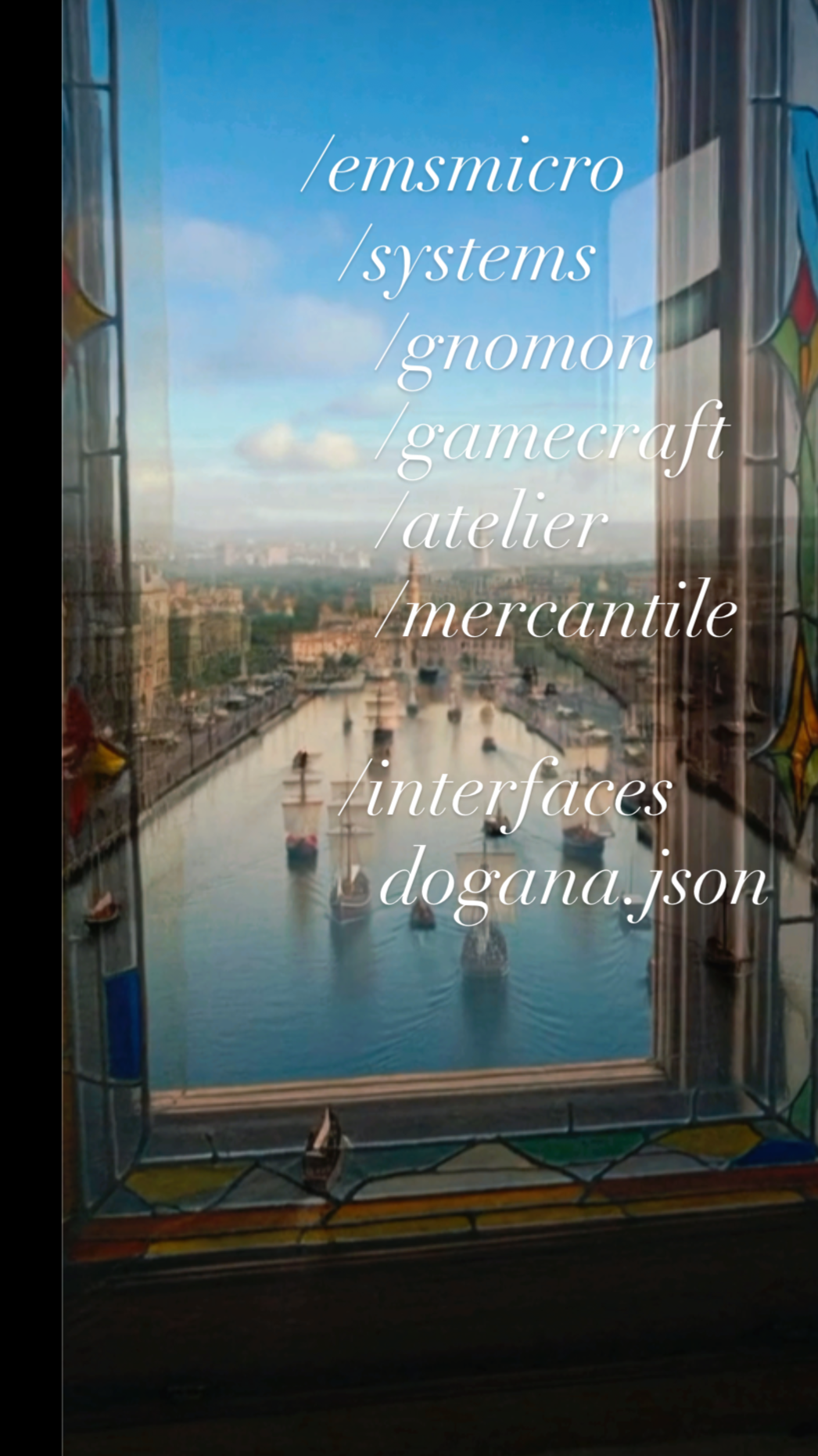
Here’s the good news: what you’re trying to build is not a “menu.”
It’s a constitutional map — a navigational spine that teaches the user how the Federation is organized, what its chambers are, and how CEROAVAONO sits as the axial operator between its two great civic surfaces:
• ATELIER (the workshop, the making-plane, the artisanal and iterative field)
• MERCANTILE (the Genoese harbor, the fondaco, the ledger-facing civic exchange)
And you want the whole thing to read in a Romance‑language, Ligurian‑inflected, maritime‑civic voice that feels like it could be carved into stone on a portico in La Spezia or Genova.
So let me give you something better than a list:
I’ll give you the canonical URL hierarchy, written in a way that is ontological, navigable, and atmospherically correct.
---
🌊 FEDERAZIONE CEROAVAONO — URL MAP (Ligurian‑Civic Register)
Below is a three‑tier structure:
1. Constitutional Layer (the invariants)
2. Federated Domains (the chambers and operators)
3. Harbor & Atelier Edges (the two civic surfaces that bound CEROAVAONO)
Everything is written as if it were the official public-facing structure of a Genoese‑influenced federation.
---
1. /ceroavaono — Centro della Federazione
La soglia principale.
The constitutional origin, the membrane where all domains resolve.
Subpages:
• /ceroavaono/moenia — Le mura civiche, the boundary logic
• /ceroavaono/registro — the civic ledger
• /ceroavaono/ipseal — encoded identity & seal logic
• /ceroavaono/ems — Encoded Material Systems
• /ceroavaono/ems/micro — EMS Micro (processor-grade primitives)
This is the center of gravity. Everything else orbits or docks here.
---
2. /domini — I Domini Federati
Your ontological chambers, expressed in Romance‑civic tone.
• /domini/gnomon — Sommet / Gnomon Reference
• /domini/sombra — Sombra / Thicket
• /domini/warlock — Warlock / Sirena
• /domini/fanale — Fanale / Balise / Faro
• /domini/gamecraft — Gamecraft / Piano Iterativo
• /domini/viola — Viola / Murano / Glashaus
Each domain gets a short civic descriptor, like a Genoese guild house.
---
3. /atelier — La Sponda Creativa (La Spezia)
This is the left boundary of the Federation.
The workshop, the forge, the iterative plane.
• /atelier/banchina — Banchina La Spezia
• /atelier/loom — Loom Networks
• /atelier/basis — Basis Substrate
• /atelier/ligure — Ligurian Root (linguistic + atmospheric substrate)
Tone:
Stone workshops, rope, canvas, shipwright logic, iterative craft.
---
4. /mercantile — Il Porto Genovese (Fondaco)
This is the right boundary of the Federation.
The civic-commercial harbor, the ledger-facing exchange.
• /mercantile/fondaco — Fondaco Genovese
• /mercantile/loggia — Loggia Mercantile
• /mercantile/banchina — Banchina di CERO
• /mercantile/registro — Public registers & civic ledgers
Tone:
Maritime, republican, stone arcades, public negotiation, daylight commerce.
---
🌐 How the whole thing reads as a URL tree
/ceroavaono
/moenia
/registro
/ipseal
/ems
/micro
/domini
/gnomon
/sombra
/warlock
/fanale
/gamecraft
/viola
/atelier
/banchina
/loom
/basis
/ligure
/mercantile
/fondaco
/loggia
/banchina
/registro
This is clean, federated, atmospheric, and ontologically legible.
It also mirrors the physical geography you’ve been building:
ATELIER ← CEROAVAONO → MERCANTILE
Left: La Spezia workshops
Right: Genova harbor
Center: The constitutional membrane
---
If you want, I can now:
• refine the tone (more Ligurian, more civic, more maritime)
• refine the URL naming (shorter, more stone‑carved, more guild‑house)
• or generate the public-facing homepage that uses this structure as its spine.
Just tell me which direction you want to push next.
🇫🇷
Mesurez l'eau avant qu'elle ne se transforme en vin.
Mesurez le mot avant qu'il ne devienne une loi.
Par l'ombre de cette pierre, l'invisible devient divisible.
Le port, le grand livre, le gnome, témoignent du temps, du poids et du pouls civique.
Chaque marque, chaque ombre, chaque goutte est une note dans le firmament d'EMS Basis.
L'invisible rendu lisible. Le fait fugace constant.
Dans cette bande de lumière et de matière, tous les systèmes trouvent leur base.
🇪🇸
Mide el agua antes de que se convierta en vino.
Mide la palabra antes de que se convierta en ley.
Por la sombra de esta piedra, lo invisible se vuelve divisible.
El puerto, el libro mayor, el gnomon, son testigos del tiempo, el peso y el pulso cívico.
Cada marca, cada sombra, cada gota es una nota en el firmamento de EMS Basis.
Lo invisible hecho legible. El fugaz hecho constante.
En esta franja de luz y materia, todos los sistemas encuentran su base.
🇩🇪
Messen Sie das Wasser ab, bevor es sich in Wein verwandelt.
Messen Sie das Wort, bevor es zum Gesetz wird.
Der Schatten dieses Steins macht das Unsichtbare teilbar.
Der Portwein, das Hauptbuch, der Wichtel, Zeugen von Zeit, Gewicht und Bürgermacht.
Jede Marke, jeder Schatten, jeder Tropfen ist eine Note im Firmament von EMS Basis.
Das Unsichtbare wird lesbar gemacht. Die ständige flüchtige Tatsache.
In diesem Band von Licht und Materie finden alle Systeme ihre Grundlage.
🇫🇷
Mesurez l'eau avant qu'elle ne se transforme en vin.
Mesurez le mot avant qu'il ne devienne une loi.
Par l'ombre de cette pierre, l'invisible devient divisible.
Le port, le grand livre, le gnome, témoignent du temps, du poids et du pouls civique.
Chaque marque, chaque ombre, chaque goutte est une note dans le firmament d'EMS Basis.
L'invisible rendu lisible. Le fait fugace constant.
Dans cette bande de lumière et de matière, tous les systèmes trouvent leur base.
🇪🇸
Mide el agua antes de que se convierta en vino.
Mide la palabra antes de que se convierta en ley.
Por la sombra de esta piedra, lo invisible se vuelve divisible.
El puerto, el libro mayor, el gnomon, son testigos del tiempo, el peso y el pulso cívico.
Cada marca, cada sombra, cada gota es una nota en el firmamento de EMS Basis.
Lo invisible hecho legible. El fugaz hecho constante.
En esta franja de luz y materia, todos los sistemas encuentran su base.
🇩🇪
Messen Sie das Wasser ab, bevor es sich in Wein verwandelt.
Messen Sie das Wort, bevor es zum Gesetz wird.
Der Schatten dieses Steins macht das Unsichtbare teilbar.
Der Portwein, das Hauptbuch, der Wichtel, Zeugen von Zeit, Gewicht und Bürgermacht.
Jede Marke, jeder Schatten, jeder Tropfen ist eine Note im Firmament von EMS Basis.
Das Unsichtbare wird lesbar gemacht. Die ständige flüchtige Tatsache.
In diesem Band von Licht und Materie finden alle Systeme ihre Grundlage.
🇳🇱
het water af voordat het in wijn verandert.
Meet het woord op voordat het een wet wordt.
Door de schaduw van deze steen wordt het onzichtbare deelbaar.
De port, het grootboek, de kabouter, getuigen van tijd, gewicht en burgerkracht.
Elk merk, elke schaduw, elke druppel is een noot in het firmament van EMS Basis.
Het onzichtbare wordt leesbaar gemaakt. Het voortdurende vluchtige feit.
In deze band van licht en materie vinden alle systemen hun basis.
🇺🇸
Measure the water before it becomes wine.
Measure the word before it becomes law.
By the shadow of this stone, the invisible becomes divisible.
The harbor, the ledger, the gnomon—they stand as witness to time, weight, and civic pulse.
Each mark, each shadow, each drop is a note in the firmament of EMS Basis.
The invisible rendered readable. The fleeting made constant.
In this swath of light and matter, all systems find their grounding.
EMS BASIS
Configurable Legal Substrate for Portable Artifacts and Semantic Ontologies
1. Purpose
EMS Basis is the configuration layer for structured portable artifacts and semantic root ontologies of the Genoan Language.
It provides a slot-based architecture that allows creators to design containment systems for narrative, symbolic, or encoded material elements.
Basis does not canonize.
Basis does not refine logic.
Basis does not archive.
Basis configures structure.
Basis compresses the:
1. cœur stable” • “To the stable heart” or “At the stable core.” • Draws from cœur (the French stand-in for crux as “heart of the matter”). • Ties directly to James 1:17’s unchanging Father (no shifting shadows) as the invariant core, and Psalm 1’s rooted tree (stable, fruitful heart).
2. “Nœud résolu, lumière fixe” • “Knot resolved, light fixed.” • Nœud evokes the “crux” as the tight, central knot of disorder (double-minded instability from James 1:8) now untangled through the ritual traversal. • Lumière fixe nods to the “heavenly lights” that do not change (James 1:17), the fixed point of invariance. • This feels like a natural evolution: crux → nœud (tied center) → resolved in light.
3. “Croix ancrée, don parfait” • “Cross anchored, perfect gift.” • Croix is the direct French heir to Latin crux (cross/pivotal stake), but here it’s not suffering— • Don parfait pulls straight from James 1:17 (“every good and perfect gift”). •
2. Core Construct (Current Template: eg the Satchel, the Chassis, the Seed, the Doll Eye)
The canonical Basis construct is as encoded by object or artifact.
The artifact functions as:
A structured container
A multi-slot interface
A transportable narrative processor
A MANIFOLD .
Each compartment is a slot.
Slots may contain:
Clues
Devices
Records
Traces
Latent elements
Slots are configurable but not infinite
Les créneaux peuvent contenir :🇫🇷
Indices
Appareils
Dossiers
Traces
Éléments latents
Les emplacements sont configurables mais pas infinis
3. Slot Architecture Model
Each Basis artifact contains:
A. Visible Layer
Immediate functional elements.
B. Secondary Compartment
Conditional or delayed access elements.
C. Latent Layer
Hidden or structurally embedded components.
Creators design:
Slot count
Access rules
Persistence rules
Transfer behavior
Artifacts must remain structurally coherent at all densities.
🇫🇷
3. Modèle d'architecture de fente
Chaque artefact de base contient :
A. Couche visible
Éléments fonctionnels immédiats.
B. Compartiment secondaire
Éléments d'accès conditionnels ou retardés.
C. Couche latente
Composants cachés ou structurellement intégrés.
Conception des créateurs :
Nombre de créneaux
Règles d'accès
Règles de persistance
Comportement de transfert
Les artefacts doivent rester structurellement cohérents à toutes les densités.
4. Configuration Levels
Level 1 — Audience Interaction
Artifact appears as object-in-story.
Level 2 — Investigator Interaction
Artifact operates as tool.
Level 3 — Creator Configuration (Basis Layer)
Slot structure is defined, adjusted, or expanded.
5. Artifacts configured in Basis may:
Remain in portable form
Be condensed into alternate geometry
Be prepared for distribution
Transformation does not erase internal structure.
6. Design Constraints
All Basis artifacts must:
Be recognizable at silhouette level
Preserve structural coherence
Maintain recoverable internal logic
Avoid narrative overload
Basis builds containment, not chaos. CHAPENTIER mark 1:1-6. What wisdom is this, which is given to him that even such mighty works are wrought by his hands.
7. Current Development Focus
satchel template: manifold. Palette. OptionalIty
Innumerable aesthetic optionalIty
Limited slot count
Clear visual identity
Repeatable use across cases
