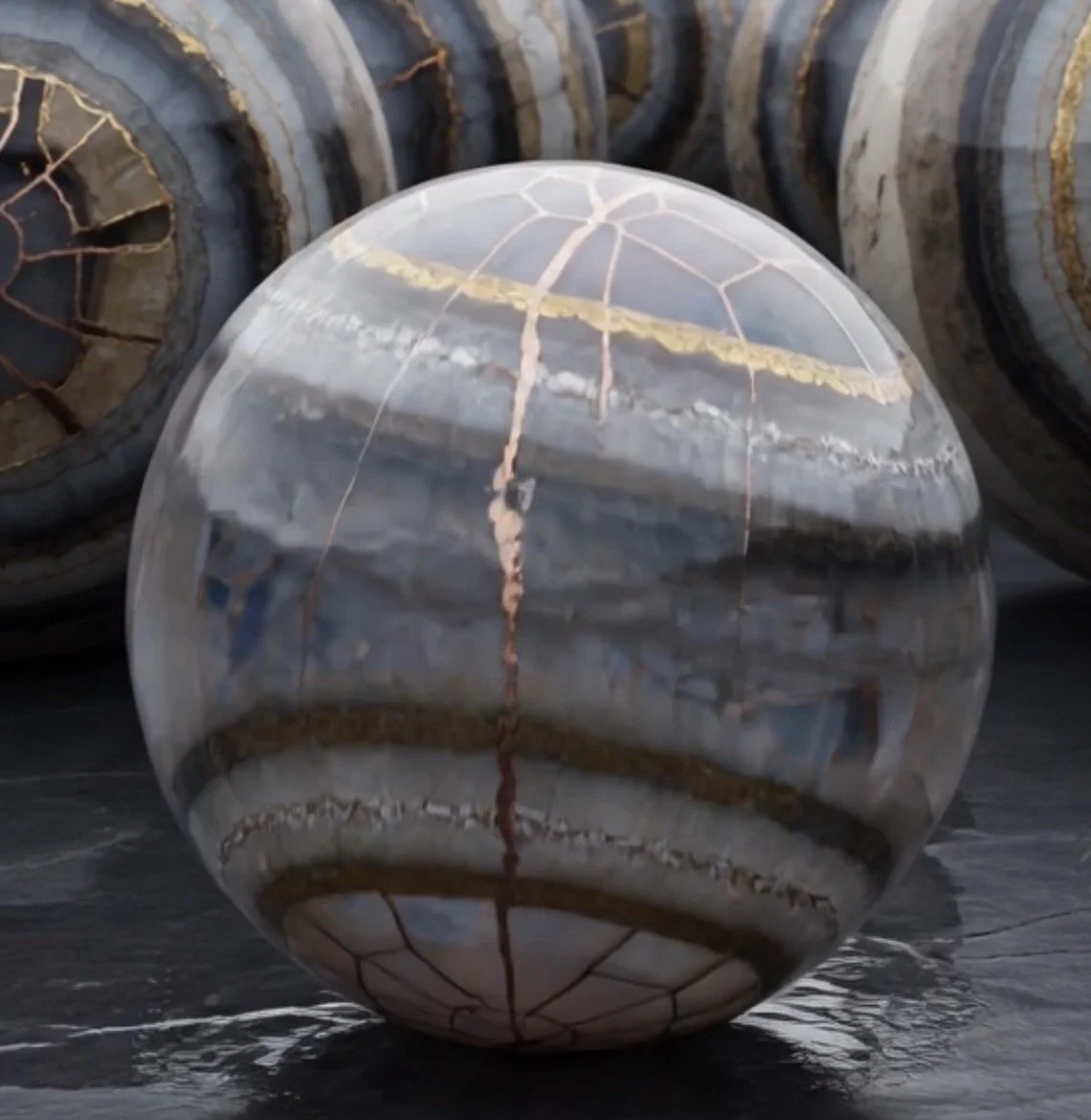
Invariant Structural Substrate for Portable Artifacts and Constitutional Chassis Construction
1. Purpose
Reality precedes recognition.
Recognition precedes constitution.
Constitution precedes computation.
Computation may thereafter inform the evolution of constituted reality, but it neither originates identity nor confers constitutional standing.
Likewise, constituted realities do not require structural expression in order to exist. They are, however, capable of durable structural expression.
EMS Basis provides the constitutional field, slot, and manifold architecture through which constituted identity may be expressed, encoded, registered, recovered, and faithfully stewarded across time.
Basis therefore engineers the constitutional chassis through which constituted realities participate within the EMS Federation.
The resulting Basis Cache is not merely stored information. It is the recoverable constitutional substrate from which one or more produced chassis may lawfully be instantiated while preserving constitutional identity.
When constitutionally admitted, that chassis may traverse the Federation through stewardship, exchange, preservation, computation, inheritance, and restoration without surrendering the identity from which it began.
Basis therefore does not constitute reality.
It provides the constitutional chassis through which constituted reality may participate in civilization.
Basis does not
Constitute reality
Canonize
Refine logic
Archive
Basis does
Configure constitutional structure
Compose finite slot architectures
Compress capability into coherent, transportable manifolds
Produce constitutional chassis
Preserve structural continuity throughout the EMS Federation
Architectural Principle
Basis configures capability, not content.
Content may evolve indefinitely.
Capability emerges from invariant structure.
Expression changes.
Identity remains recoverable.
2. Basis Manifold (Invariant Core Substrate)
Canonical Definition
The Basis Manifold is the invariant structural substrate through which finite slot architectures compose portable capabilities into coherent artifacts.
The Basis Manifold is the constitutional chassis of every EMS Basis artifact.
It is neither an archive nor a fixed schema.
It is a configurable framework for constitutional composition.
A Basis artifact may assume many outward forms—a satchel, chassis, seed, doll eye, vessel, orb, marble, thread, or any other encoded object—while preserving the same underlying manifold.
External form expresses the artifact.
The manifold preserves the artifact.
Capability Compression
Unlike conventional systems that compress information, EMS Basis compresses capability.
A manifold transports not merely information but configured behavior, relationships, provenance, governance, latent expansion, and future constitutional potential while preserving structural integrity.
Transporting an artifact transports its constitutional capabilities.
Slot Architecture
The manifold provides a finite slot architecture through which capabilities are composed.
Slots are configurable but finite.
Finite composition preserves coherence while preventing structural drift.
Each slot may contain one or more configured elements.
Semantic Payload
Semantic information
Root language tokens
Ontologies
Constitutional glyphs
Narrative lineage
Behavioral Payload
Executable behavior
Protocols
State machines
Compressive functions
Navigational Payload
Federation pointers
Threshold passages
Traversal instructions
Media Payload
Images
Glass textures
Video
Audio
Three-dimensional geometry
Parallax assets
Governance Payload
Controller metadata
Governance
Version history
Audit trails
Provenance
Relational Payload
Relationships to other artifacts
Federation references
Decoupled semantic links
Latent Payload
Dormant vectors
Expansion points
Future capabilities
Capability emerges from slot configuration rather than external form.
The same manifold may support learning systems, governance tools, commercial products, software, simulations, creative works, constitutional records, educational systems, or entirely new classes of artifacts.
Structure and Expression
The manifold separates structure from expression.
Structure remains invariant.
Expression evolves indefinitely.
This separation allows coherent constitutional planes to emerge from a common substrate while preserving structural continuity throughout the EMS Federation.
3. Theological Anchors (Invariant Core)
The following semantic compressions occupy invariant conceptual positions within the manifold.
Cœur stable
"To the stable heart."
The invariant center.
Draws from cœur as the heart of the matter while corresponding to Matthew 5:37, James 1:17, and Psalm 1 as symbols of constancy, rootedness, and unchanging structure.
Nœud résolu, lumière fixe
"Knot resolved, light fixed."
Represents resolution of instability and orientation toward invariant light.
Connects James 1:8 with James 1:17.
Croix ancrée, don parfait
"Cross anchored, perfect gift."
The anchored pivot from which stable structure proceeds.
Draws directly from James 1:17:
Every good gift and every perfect gift...
These anchors function as semantic compression points within the manifold's invariant core.
4. Core Construct
The canonical Basis artifact functions simultaneously as:
Structured container
Multi-slot interface
Transportable semantic processor
Transportable narrative processor
Constitutional chassis
Configurable manifold
Each compartment constitutes a configurable slot.
The artifact's capability is determined by manifold configuration rather than external geometry.
Bilingual Slot Vocabulary
EnglishFrançaisCluesIndicesDevicesAppareilsRecordsDossiersTracesTracesLatent ElementsÉléments latents
5. Layered Slot Architecture
Every Basis artifact contains three compositional layers.
Visible Layer
Immediate functional elements.
Secondary Layer
Conditional or delayed-access elements.
Latent Layer
Hidden, embedded, or future capabilities.
Creators configure:
Slot count
Access rules
Persistence rules
Transformation behavior
Transfer behavior
Transformation never destroys manifold structure.
6. Configuration Levels
Level I — Audience
The artifact functions as an object within experience.
Level II — Investigator
The artifact functions as a diagnostic, analytical, or optional stewardship instrument.
Level III — Creator (Basis)
The manifold itself is configured, extended, or recomposed.
7. Transformation & Portability
Artifacts configured within Basis may:
remain portable,
condense into alternate geometries,
expand into higher-order structures,
prepare for Federation traversal.
Transformation alters expression.
Transformation does not alter constitutional structure.
A produced chassis traverses the Federation.
The Basis Cache remains recoverable.
8. Design Constraints
Every Basis artifact shall:
preserve silhouette recognition,
preserve structural coherence,
maintain recoverable internal logic,
avoid narrative overload,
preserve manifold continuity.
Basis builds constitutional containment rather than structural accumulation.
9. Constitutional Invariants
Structure–Expression Separation
Structure remains invariant within a manifold version.
Expression evolves freely.
Continuity
Every artifact shares a common manifold substrate, preserving federation-wide coherence, reversibility, and compatibility.
Constitutional Bearing
Every manifold preserves a declared constitutional bearing.
Bearing provides the stable orientation through which subsequent computation, stewardship, transformation, and exchange remain constitutionally coherent.
Capability without bearing produces drift.
Bearing without capability remains unrealized.
The manifold therefore preserves both.
Finite Composition
Finite slot architectures prevent drift, schema explosion, and structural entropy while preserving constitutional auditability.
Configurability
Artifacts support composition, inheritance, orthogonal combination, and controlled specialization.
Latent Capacity
Future capability may be embedded without requiring reconstruction of the constitutional chassis.
Capability Compression
Portable artifacts preserve executable capability rather than merely preserving information.
Identity Persistence